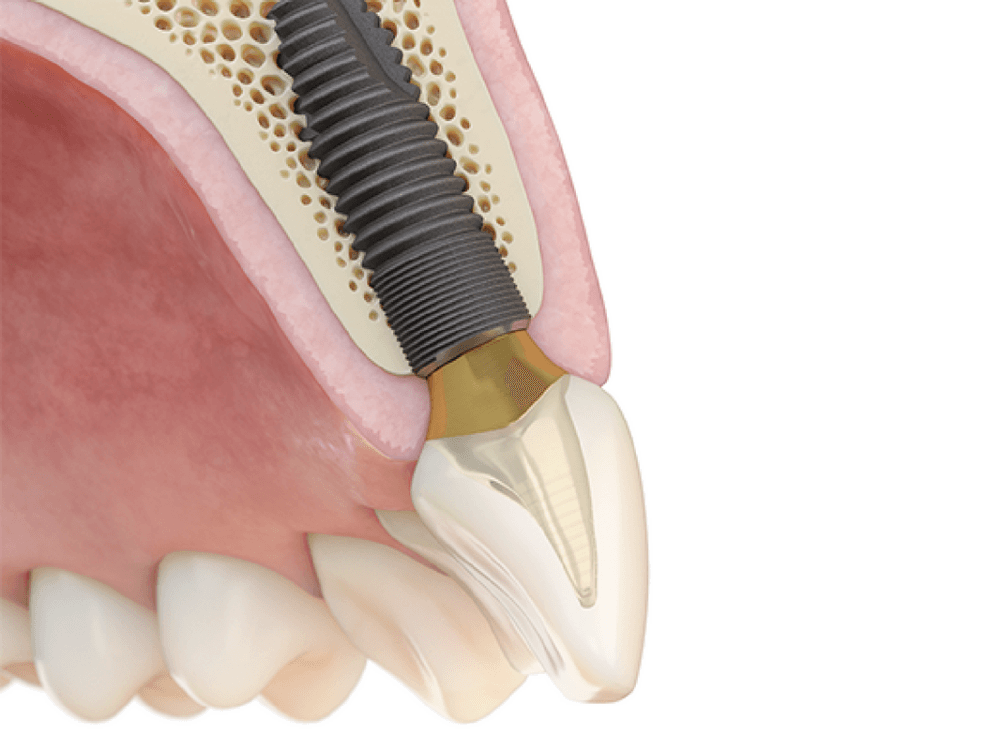
Replacing a missing tooth
A dental implant is an artificial root, generally made of titanium, placed in the bone to replace one or more missing teeth. It can support a crown or a bridge, or help stabilise certain removable dentures.
Treatment starts with an assessment
Before any procedure, a clinical and radiological evaluation is necessary. Depending on your situation, the assessment includes:
- a clinical examination
- a panoramic radiograph
- a three-dimensional radiological examination
- an analysis of the volume and quality of the bone
- planning of the implant position
How does the treatment proceed?
Assessment and planning
Your situation is evaluated and the treatment is planned.
Surgical procedure
The implant is placed in the bone, generally under local anaesthesia.
Osseointegration
A healing period allows the implant to integrate into the bone.
Loading
Once healing is sufficient, your dentist carries out the prosthetic part: crown, bridge or denture.
Follow-up
A surgical check-up is carried out after the prosthetic restoration is fitted.
After the procedure
Moderate pain, swelling or occasionally bruising may occur in the days following the procedure. Post-operative instructions and any necessary treatments are explained to you after the procedure. The overall duration of the treatment depends in particular on the initial situation, the possible need for an extraction or pre-implant surgery, and the time needed for the implant to integrate.
A treatment carried out in collaboration with your dentist
Implant treatment generally involves collaboration between the surgeon and the dentist who will carry out the prosthetic restoration. The aim is to define a coherent strategy from the outset, adapted to your situation.