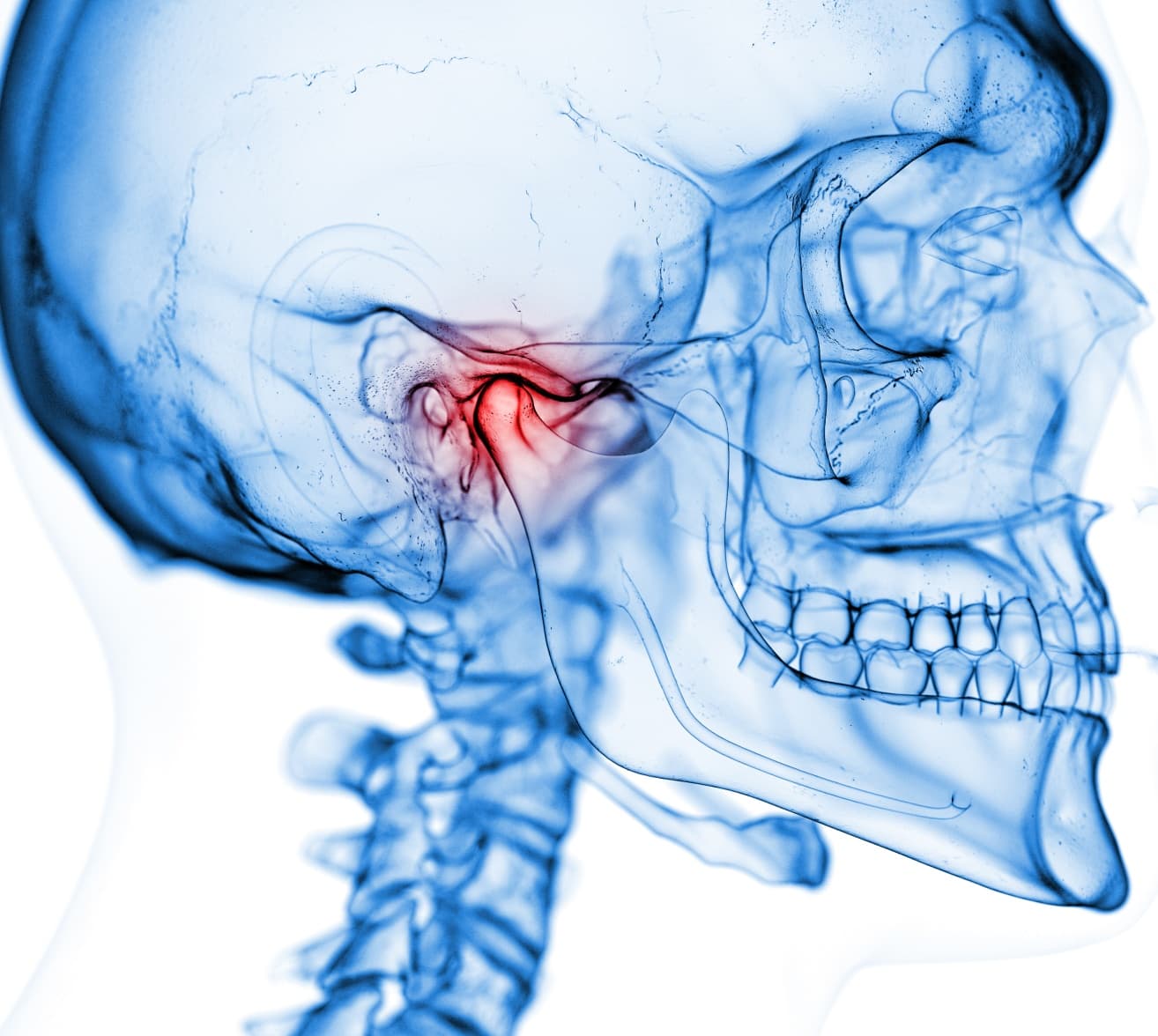
The temporomandibular joint (TMJ) is the joint that connects the mandible (lower jaw) to the temporal bone of the skull, just in front of the ear. We have two, one on each side of the face. It allows the movements essential for opening and closing the mouth, chewing, speaking, yawning and swallowing. Its function combines rotation and gliding movements of the mandible, aided by a small articular disc that facilitates movement.
What are the most frequent problems?
TMJ disorders can manifest themselves in different ways: pain in front of the ear or in the jaw, difficulty or limitation in opening the mouth, joint cracking or clicking, a sensation of locking, or tiredness of the jaw muscles. These symptoms can sometimes be accompanied by pain in the temples, face or neck, or even headaches.
The disorders may mainly concern the joint itself, the muscles that move the jaw, or both.
What are the causes?
The causes are often multiple and combined. Stress and anxiety can encourage tooth clenching or bruxism (involuntary grinding or clenching of the teeth), placing excessive strain on the muscles and joints. Other factors may be involved: jaw trauma, muscle overload, dental occlusion disorders, wear or inflammation of the joint, or certain joint diseases.
How are they treated?
It is essential to determine the cause and the severity of the symptoms in order to make a precise diagnosis. The maxillofacial surgeon — being a physician, a dentist and a surgeon — is best placed to assess all the factors involved, to offer you a conservative and personalised approach, and to achieve an improvement.